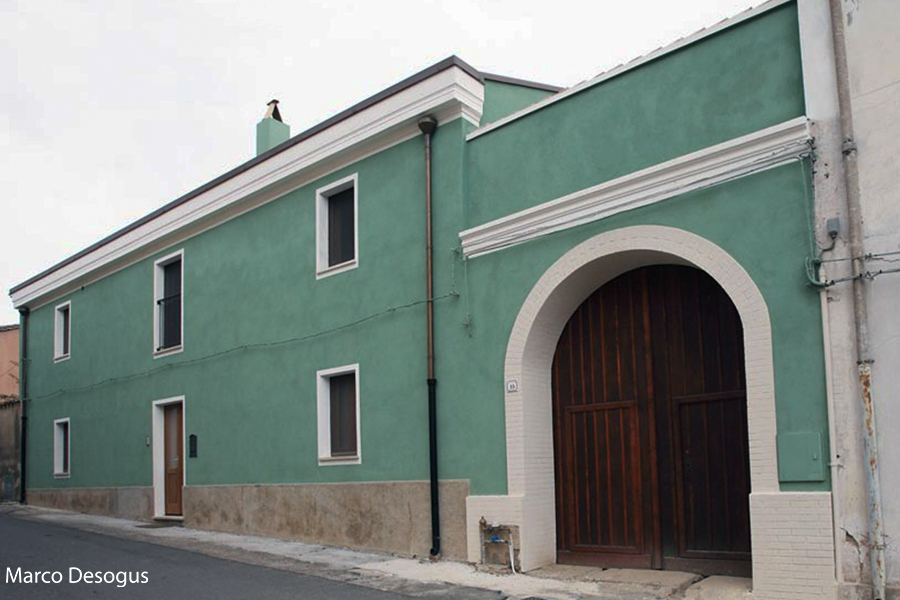
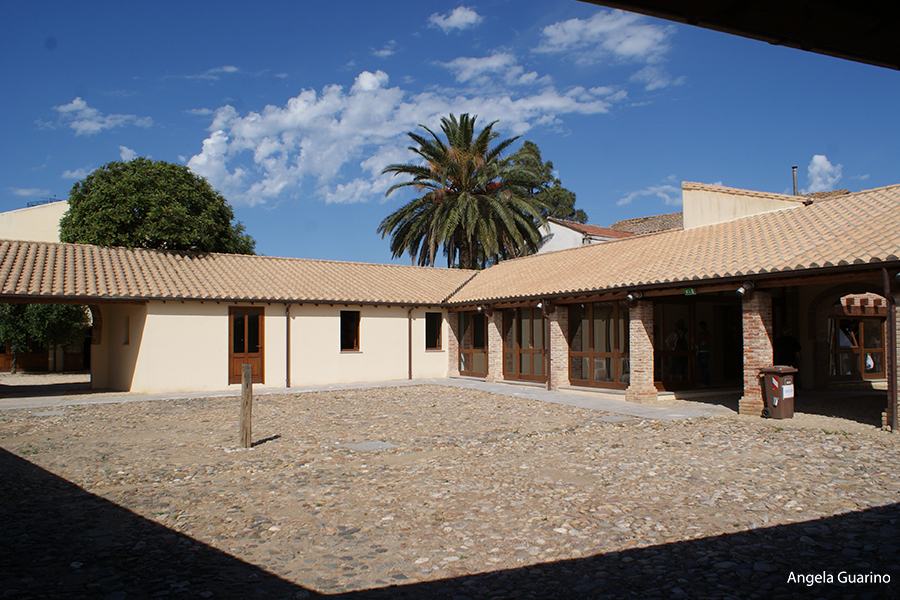
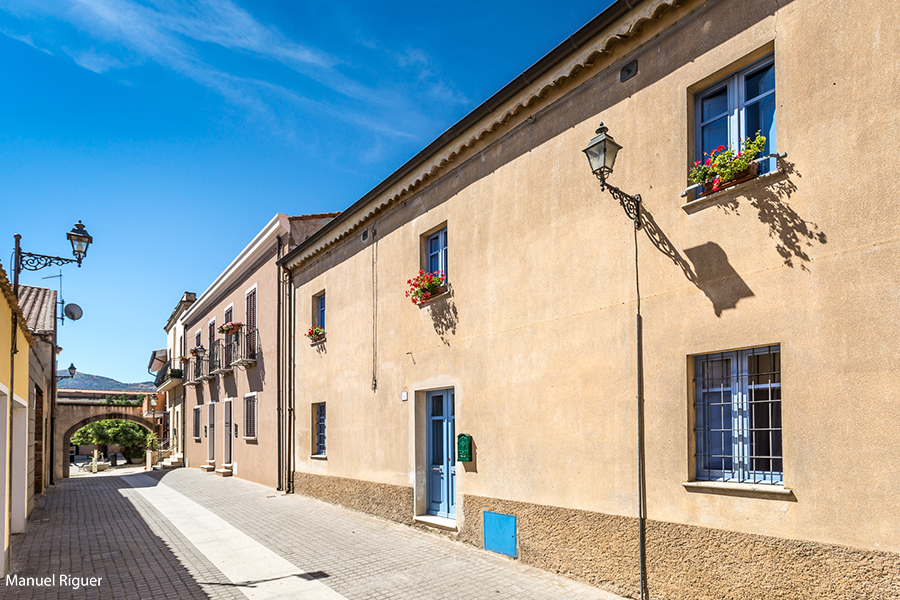
Villamassargia lies on the valley of the Cixerri River, surrounded by the Iglesiente Mountains. It preserves intact ancient textile traditions: numerous artisan workshops produce carpets, tapestries and household goods. Also notable are the creations of wrought iron and wooden artifacts. Agribusiness is of excellent quality: from cheeses to olives and oil, from bread to sweets. In the historic center typical earthen courtyard houses, which since the late 1990s have been enhanced by both the municipality and private individuals who a reuse them especially for tourism. The parish church of Our Lady of the Snows, originally built in the first decade of the 12th century by the Benedictines, now shows a Gothic-Catalan imprint, due to various reconstructive phases between the 14th and 16th centuries. The second is the church of Nostra Signora del Pilar, which offers an uncommon datum in Sardinian medieval art: from an epigraph on the facade, we get not only the date of construction (1318), but also the name of the builder (Arzocco de Garnas). Villamassargia reached its greatest splendor in the Middle Ages when it became the chief town of a curatorial district of the Judicature of Calari. From the period dates the castle of Gioiosa Guardia, whose ruins rise on a hill four kilometers from the town. At the foot of the fortress is the historic olive grove of s’Ortu Mannu, where more than 700 majestic centuries-old olive trees, grafted between 1300 and 1600 by the Benedictines, verdant with trunks that twist sturdy and gnarled. One, sa Reina, has a trunk 10 meters in circumference, a monument of nature. In the hills is the Orbai mine, nestled in a forest, exploited as early as Roman times and abandoned in the 1960s. Lead and zinc were mined there. The area is also dotted with archaeological sites, starting with the Ancient Neolithic, as confirmed by materials found in the Corongiu Acca cave. To later ages (2nd millennium B.C.) date numerous nuraghi, including Santu Pauli and Monte Exi, the tombs of Giants of Monte Ollastu and some sacred wells. To Roman times date an aqueduct and foundries.