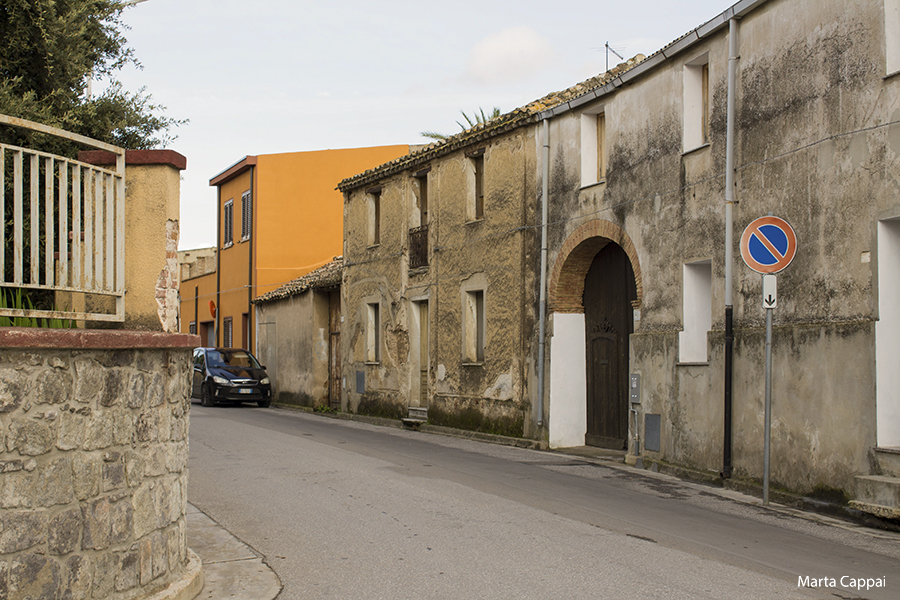
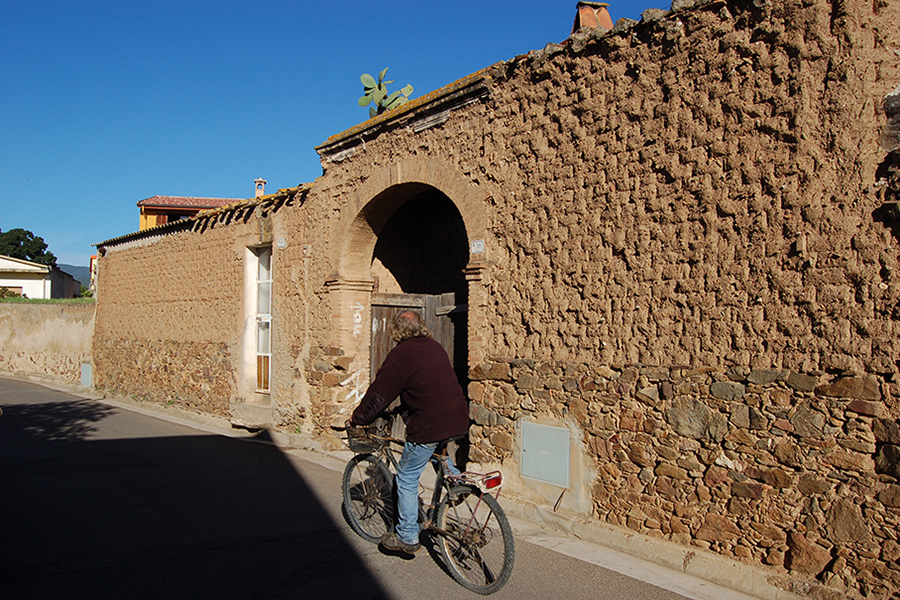
The place name derives from the Spanish hermosa and means ‘beautiful and fertile valley’, in a word ‘laughing’. Vallermosa lies in a valley bordered by two streams at the foot of Mount Cuccurdoni Mannu, on the eastern edge of the Linas Mountain massif. Campidanese mud-brick houses with artistic doorways grace the historic districts of Prazz’e cresia, Cruxi santa, Cabina and s’Ecca manna . The parish church of San Lucifero, dating from the 17th-18th centuries, stands out in the center. Notable among the earthen buildings is the former Montis house recovered by the municipality for use as a museum house. In the countryside, you’ll admire the shrine of Santa Maria, near which stand the Roman baths (3rd-4th century AD). Folk festivals are a riot of colors and sounds of traditional clothing and musical rhythms: the patron saint is celebrated on May 20, santa Maria between Sept. 7 and 9 with a procession from the parish church to the country church and scenic torchlight procession on the return.
Bordering the municipalities of Iglesias and Villacidro is the Matzanni archaeological area, which houses a wall structure, three Nuragic well temples, surrounded by a village of 13 huts, and the ruins of a Punic temple. The most valuable artifact found is the ‘Barbetta’ bronze statuette, exhibited in Cagliari’s national archaeological museum. On a hill near the village rises the nuraghe su Casteddu de Fanaris, from which you will admire a striking scenery. The territory has been inhabited since Nuragic times and then in Punic-Roman times, but the origins of the settlement date back to the mid-17th century, as part of the events of Spanish feudal Sardinia: the Marquis of Villasor, Blasco de Alagòn organized a massive relocation of families to the depopulated villages of Pau Josso and Pau de Vignas.