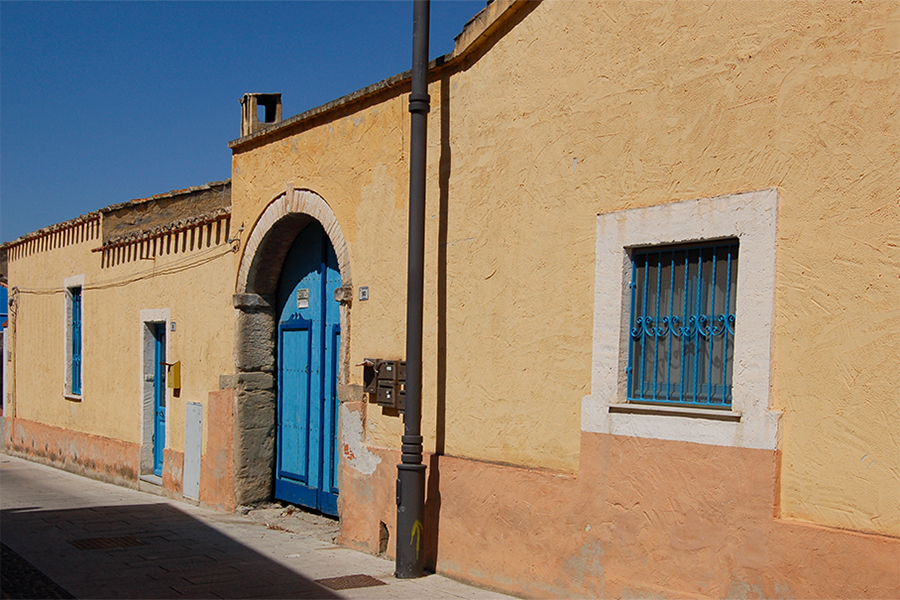
Soleminis rises 200 meters above sea level on the border between the Campidanese plain and the foothills of Mount Serpeddì, in one of the most fertile areas of southern Sardinia, whose main crops are vineyards, olive groves and cereals. Soleminis is a town in Parteolla, a hilly area in southeastern Campidano, characterized by intense agro-pastoral activity and renowned for baking, honey production, and herb harvesting.
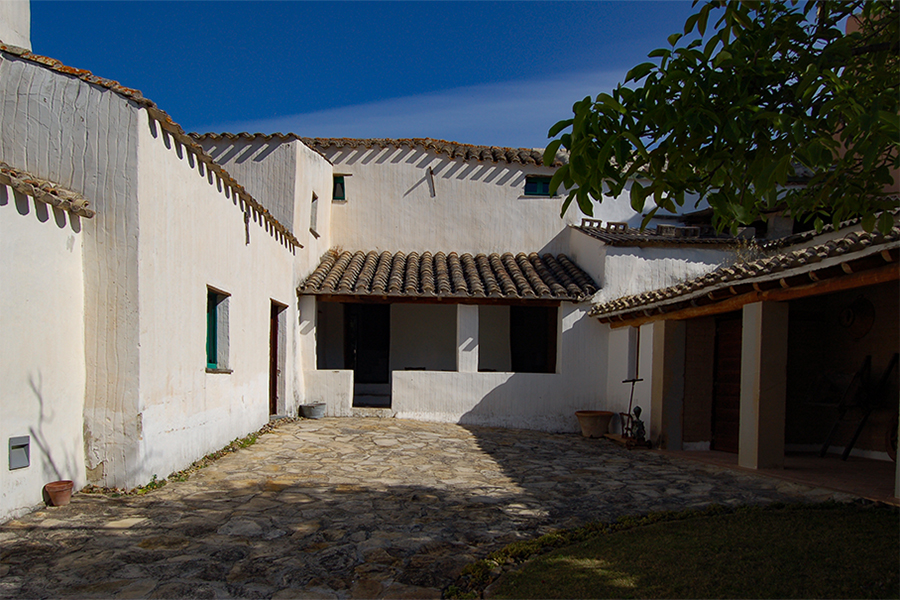
The center first appears in official documents in the 11th century, when it belonged to the giudicato of Cagliari, then passed to the giudicato of Arborea and the republic of Pisa. It cannot be ruled out that it was inhabited as early as Roman times first and Byzantine times later. Throughout the Soleminese territory, human presence has been documented since the Neolithic period, as demonstrated by the sites of Facc’e Idda, is Calitas and Cuccuru Cresia Arta and, above all, by the domu de Janas de s’Acqua ‘e is Dolus, ‘the water of sorrows,’ (3500-2700 B.C.), carved into the rock. At Sedd’e Cresia, one of the highest points of the village-its first nucleus-is the 17th-century parish church of St. James the Apostle, built in the late Gothic style, perhaps on an earlier medieval layout. The church, in addition to a silver trousseau, preserves valuable artistic testimonies: two paintings on canvas, one representing Trinity and Holy Family (late 16th century), the other depicting the Redemption, attributed to painter Sebastiano Scaleta (mid-18th century), a wooden crucifix and the 18th-century statue of the patron saint, celebrated at the end of July together with the co-patron saint St. Anne. The church is one of the stops on the path of santu Jucu in Sardinia. The old town still preserves traditional rural architecture made of mud brick, including the Corda Spada house, now a cultural center displaying a fine ethnographic collection. Also to be admired are the Dessy house and Emilio’s vegetable garden.