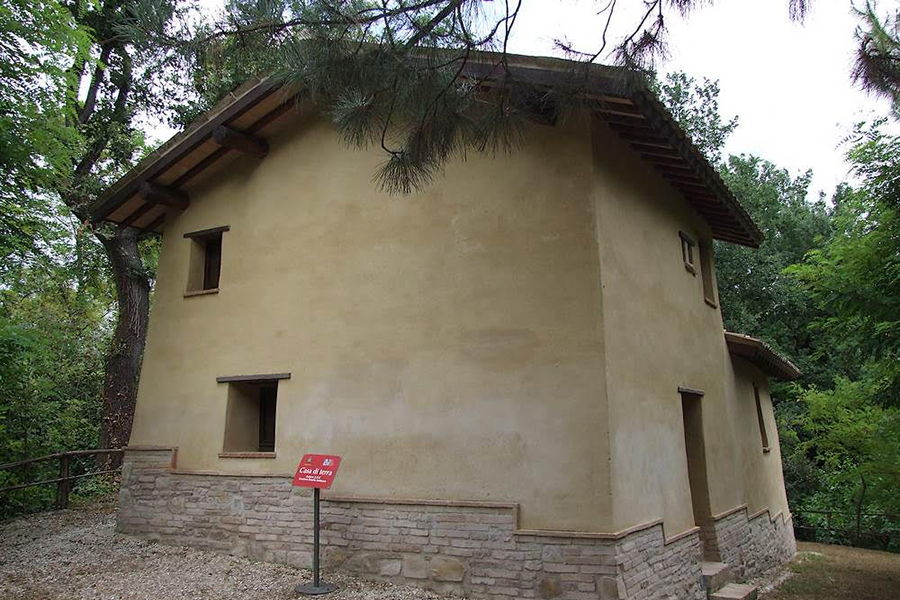
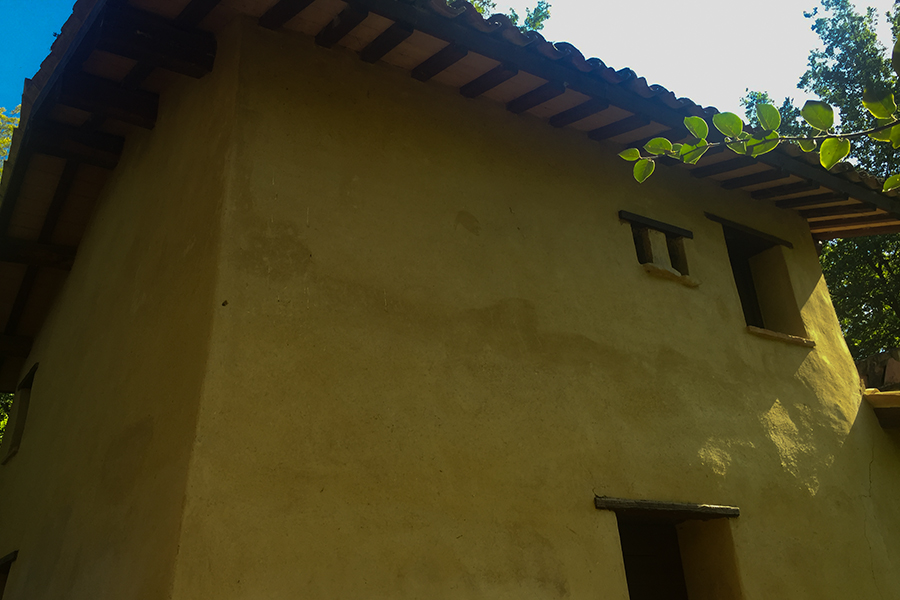
Treia founded in the Middle Ages, was called Montecchio. In 1790 the name Treia was restored. In the center is the Piazza della Repubblica with its public and religious buildings: the Palazzo Comunale, with a beautiful portico, the result of the union of two palaces that took place between the 16th and 17th centuries also houses the Municipal Picture Gallery in the Council Chamber, the Hall of Coats of Arms and other rooms on the main floor; the Church of San Filippo, which preserves a Crucifix perhaps from the 13th century; and finally the building of the Accademia Georgica, designed by Giuseppe Valadier. The Piazza has an open side bordered by a balustrade from the late 1700s on which rests the 1785 monument to Pius VI. The city also has a lovely Municipal Theater built between 1805 and 1817 and decorated with stucco and wooden paintings. The cathedral, dedicated to SS. Annunziata, is 19th-century, but the original construction, of which only the bell tower remains, dates back to the 12th century. The convent of the Church of St. Francis houses the Civic Archaeological Museum, which preserves notable artifacts documenting the various phases of Treia’s history, from the time of the Roman Trea. Just outside the center is the Santuario del Santissimo Crocifisso, built on the ancient Roman settlement of Trea. Also from Roman times are some finds walled into the enclosure wall, at the base of the bell tower and at the entrance to the convent. The present sanctuary is the work of Cesare Bazzani, an architect who worked extensively in the Macerata area during the Fascist two decades. Inside there is an important wooden Crucifix, fifteenth century, of fine workmanship. Since 1979 the “Disfida del Bracciale,” a historical re-enactment involving the entire town center and town activities, has been celebrated in the historic center of Treia. The event is reminiscent of the game of pallone col bracciale that originated in the Renaissance era and was once reserved for the youth of noble families. The actual playing area is located right along the stretch of wall below the main square. In the territory of treia di are found some earthen buildings built with the masonry technique.