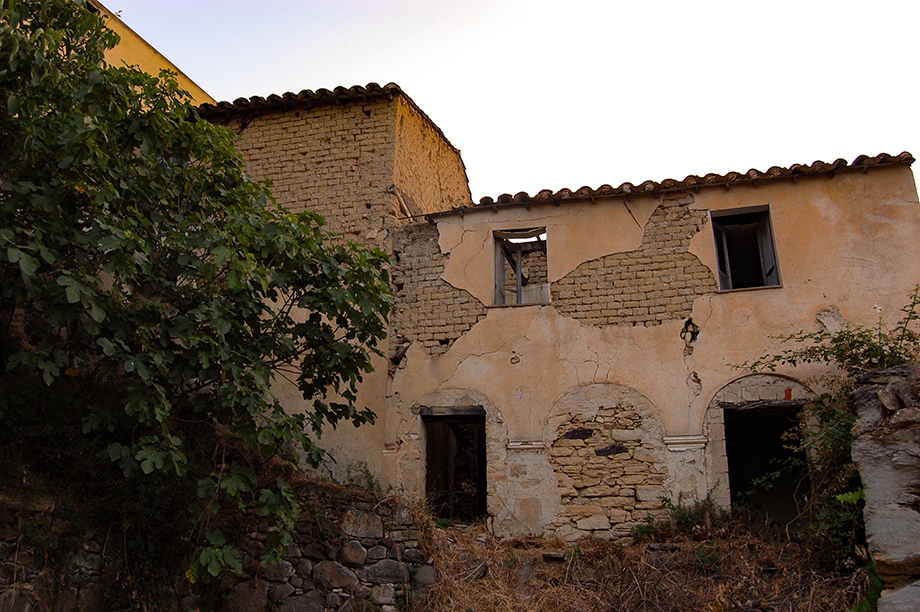
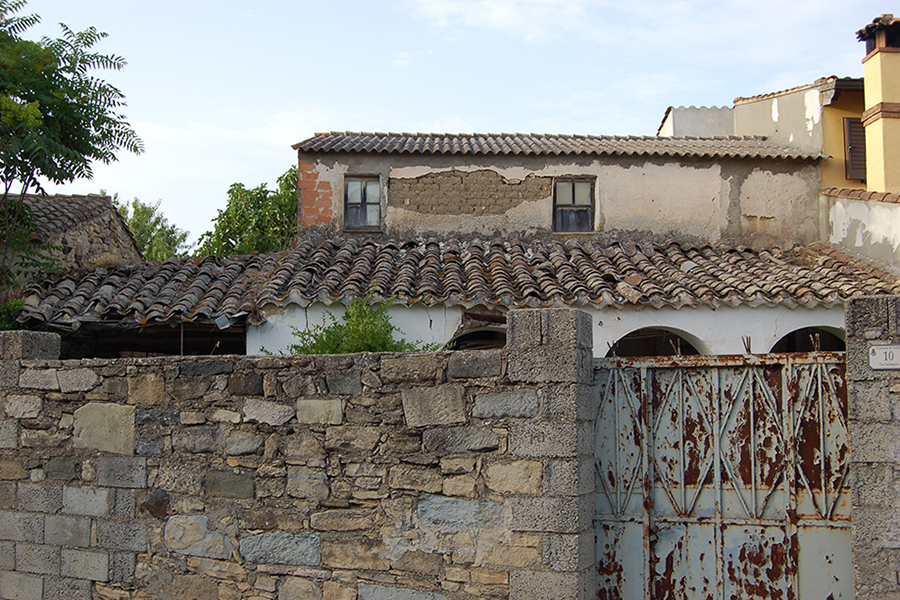
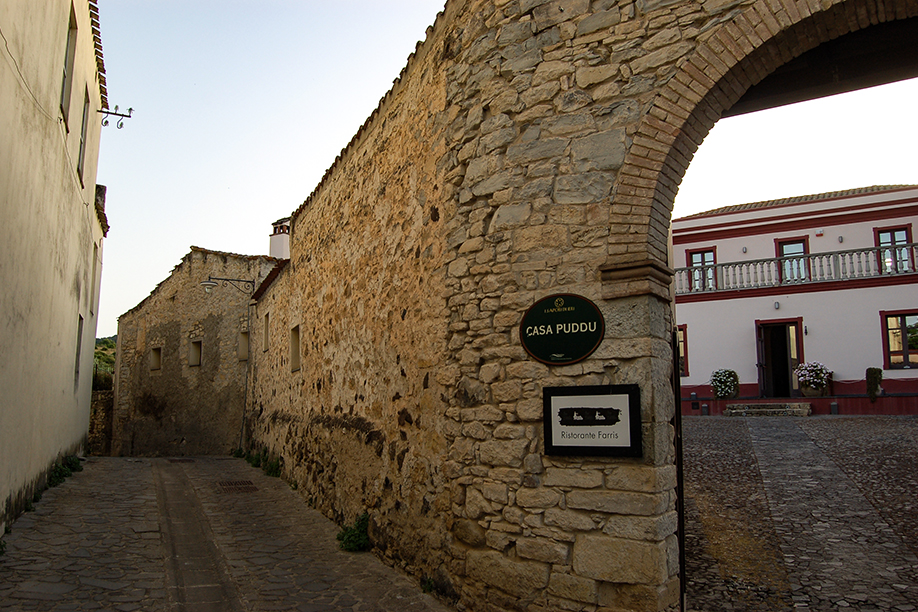
A journey through prehistory and nature in a small village nestled among rolling hills planted with cereals, olive trees, vineyards, almond trees and vegetable gardens. Siddi, now populated by about 600 inhabitants, may have Roman origins, along the grain route from Usellus to Calaris. It is first documented in 1346, referred to as Silli, perhaps from the Vulgar Latin casilli, ‘group of small houses.’ The village is characterized by narrow streets overlooked by ‘court’ houses, with làdiri walls, monumental portals and colorful murals. A museum of agro-food traditions is housed in Steri House, dating from the 17th century. To taste local delicacies, you should not miss the regional festival of good food Appetitively. Another exhibit not to be missed is the unique Ornithological Museum of Sardinia, with a collection of hundreds of birds, both resident and migratory, that inhabit Sardinian habitats. At the entrance to the village you will find the church of St. Michael the Archangel, from the second 13th century: it is the smallest Romanesque sanctuary on the island, with a two-nave plan and a single apse. Particular are the reliefs carved in the lintel of the portal, which reproduce five mysterious anthropomorphic figures, one of which is upside down (perhaps Lucifer, Adam and Eve, St. Michael and God): a unique work in Sardinian medieval sculpture. Nearby stands the 18th-century parish church of the Visitation of the Virgin Mary.
Over all the Giara di Siddi preserves an invaluable archaeological heritage, a most interesting ‘corridor’ nuraghe in the area, the domu de Janas of Scaba ‘e Arriu, and in particular we recommend visiting the Giants’ tomb of sa Domu ‘e s’Orku, an extraordinary (and well-preserved) example of Nuragic funerary architecture (1500-1300 BC).